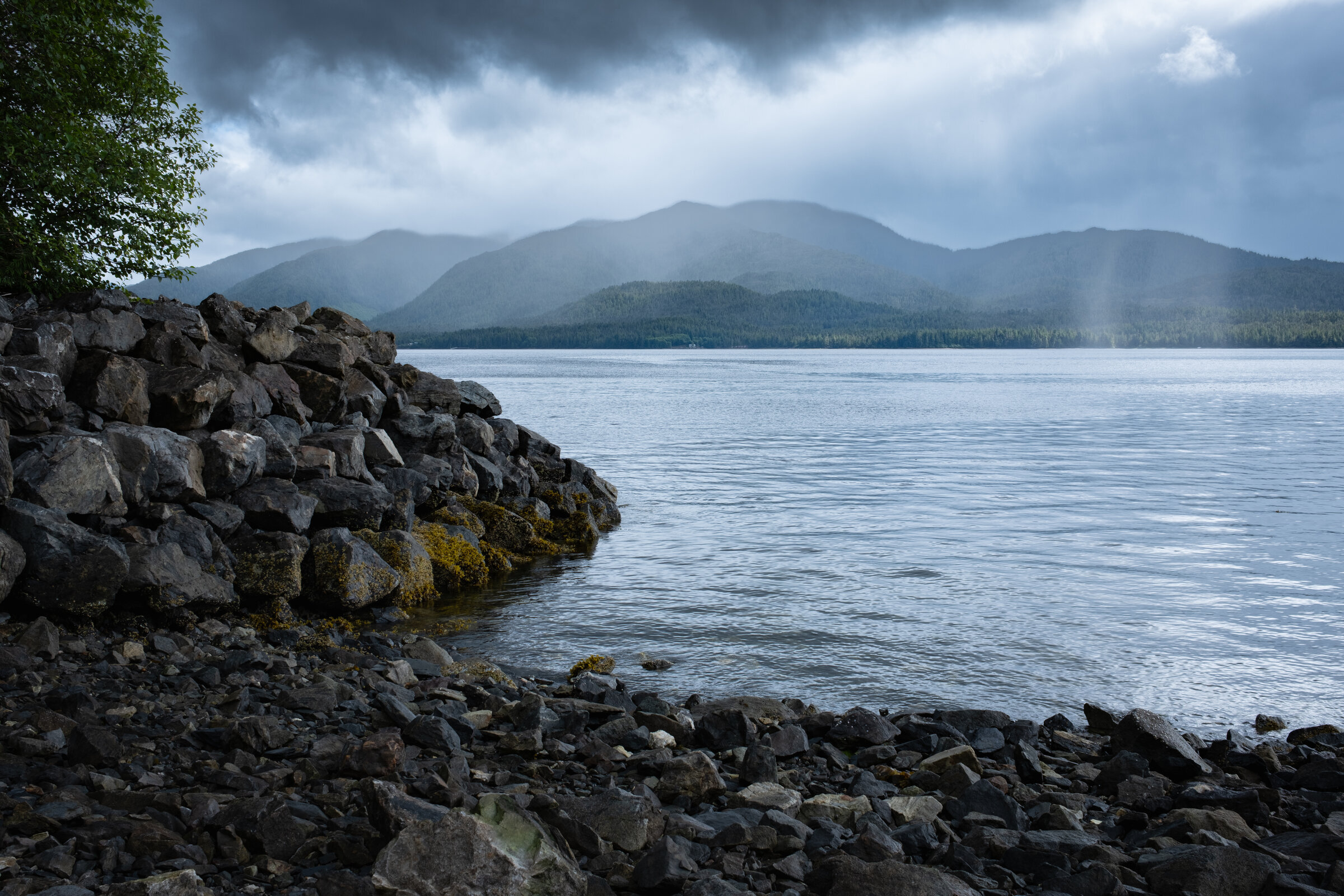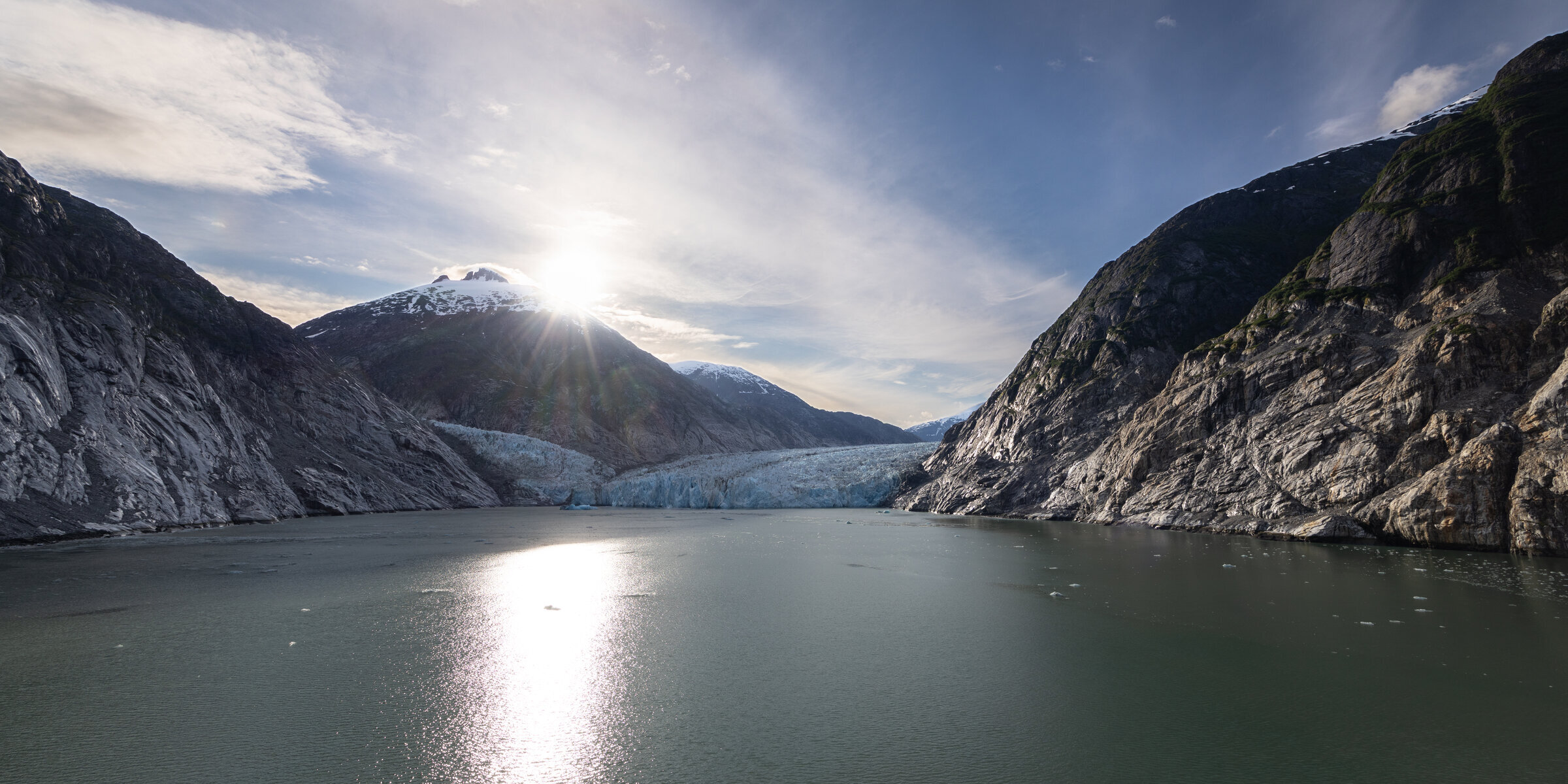
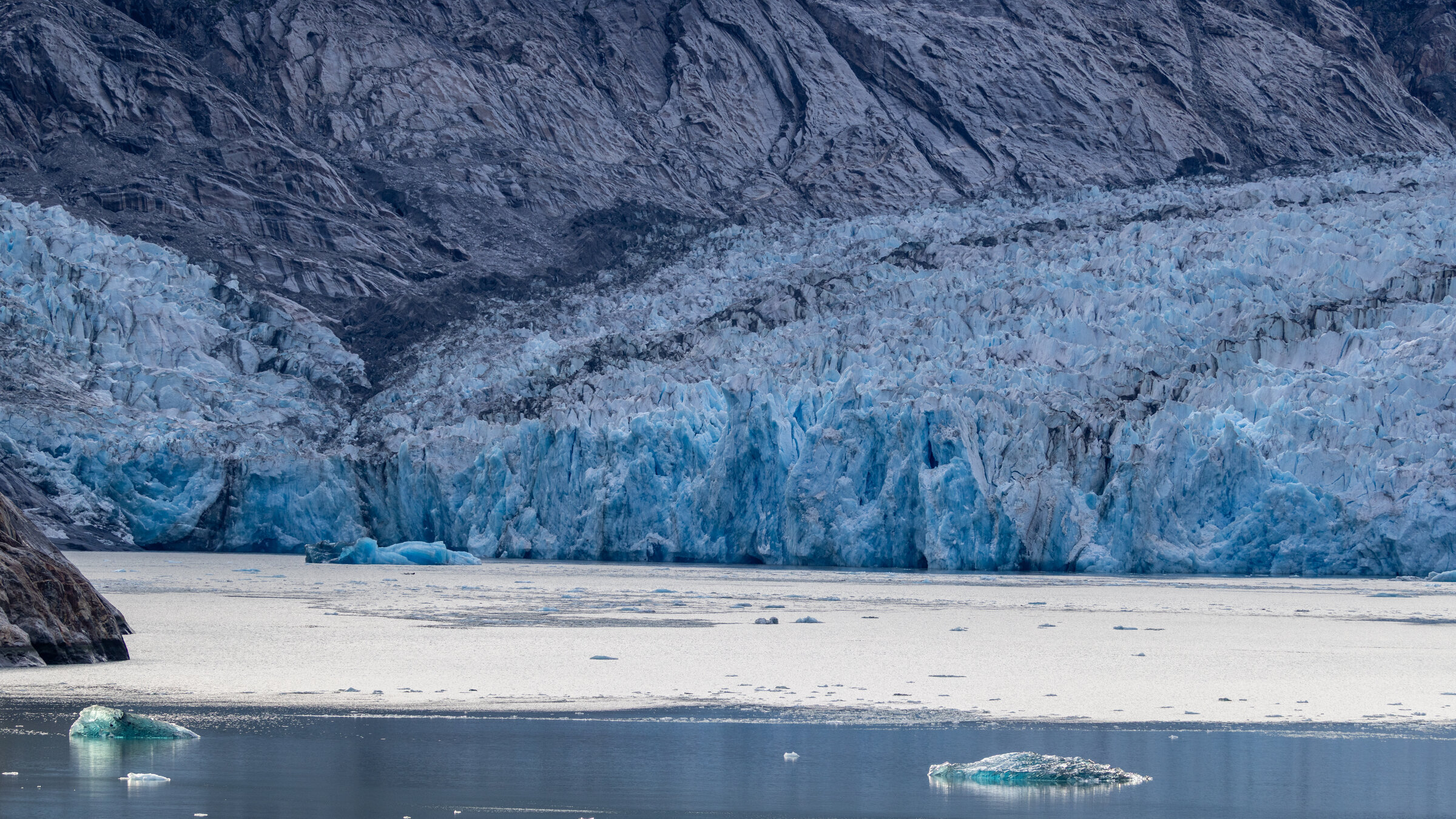
A blue you only see inside a glacier.
Took a zodiac up to the face of Dawes. From that close, the ice fills your view. It isn’t really white. It’s a dense, saturated blue, almost too vivid to look real. Vertical cracks run the full height of the wall, and the scale of the thing doesn’t register until you notice the icebergs already floating at the waterline.
The whole face is moving the whole time. You just don’t see it until something gives.
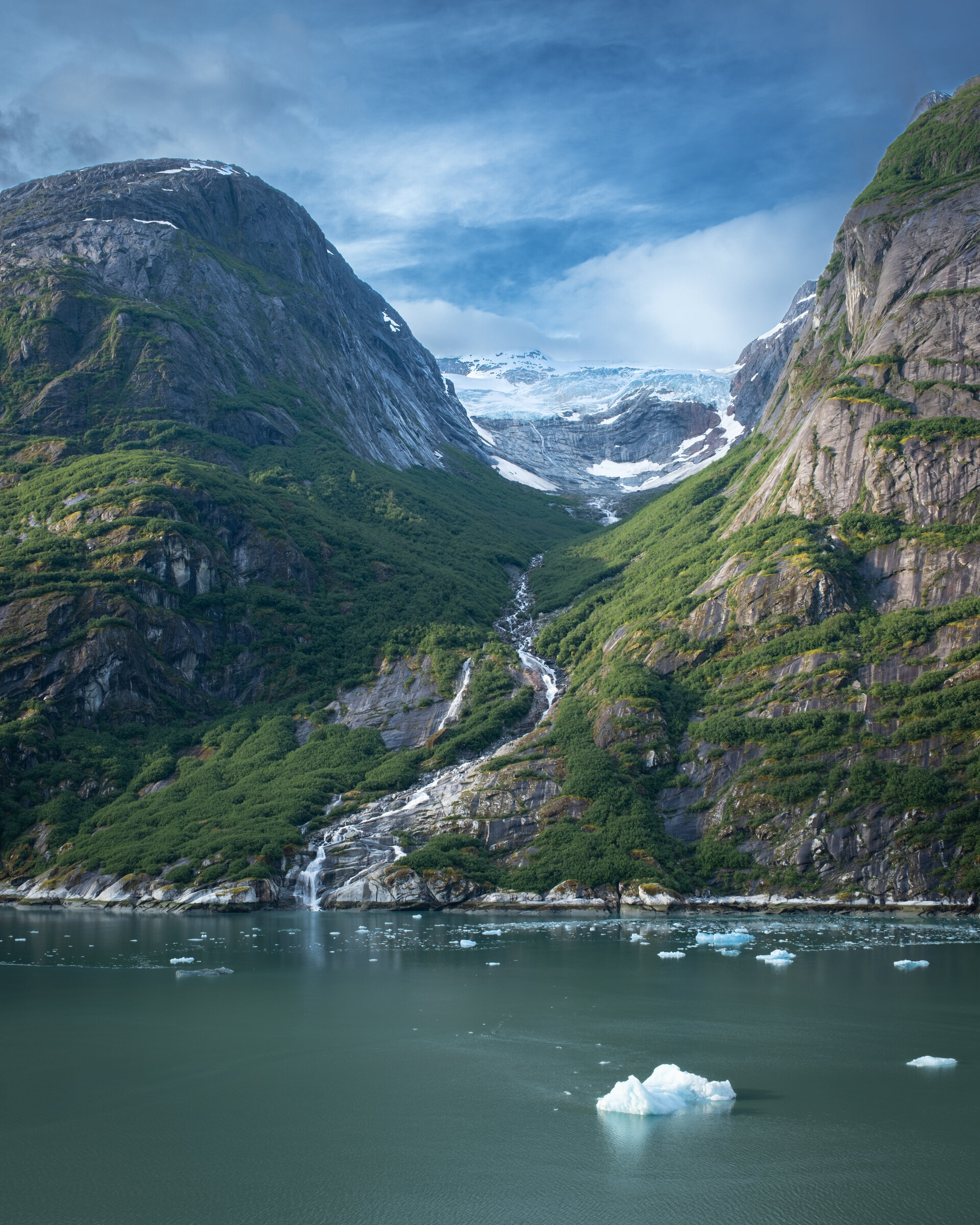
A waterfall from a glacier that no longer reaches the shore.
The melt stream runs the full length of the cliff face before dropping into the fjord. At the top, just visible above the treeline, the glacier that feeds it. At the bottom, two icebergs sitting in the blue-green water.
The scale of it only registers when you realize how far down the cliff that water is falling, and how long it’s been falling.
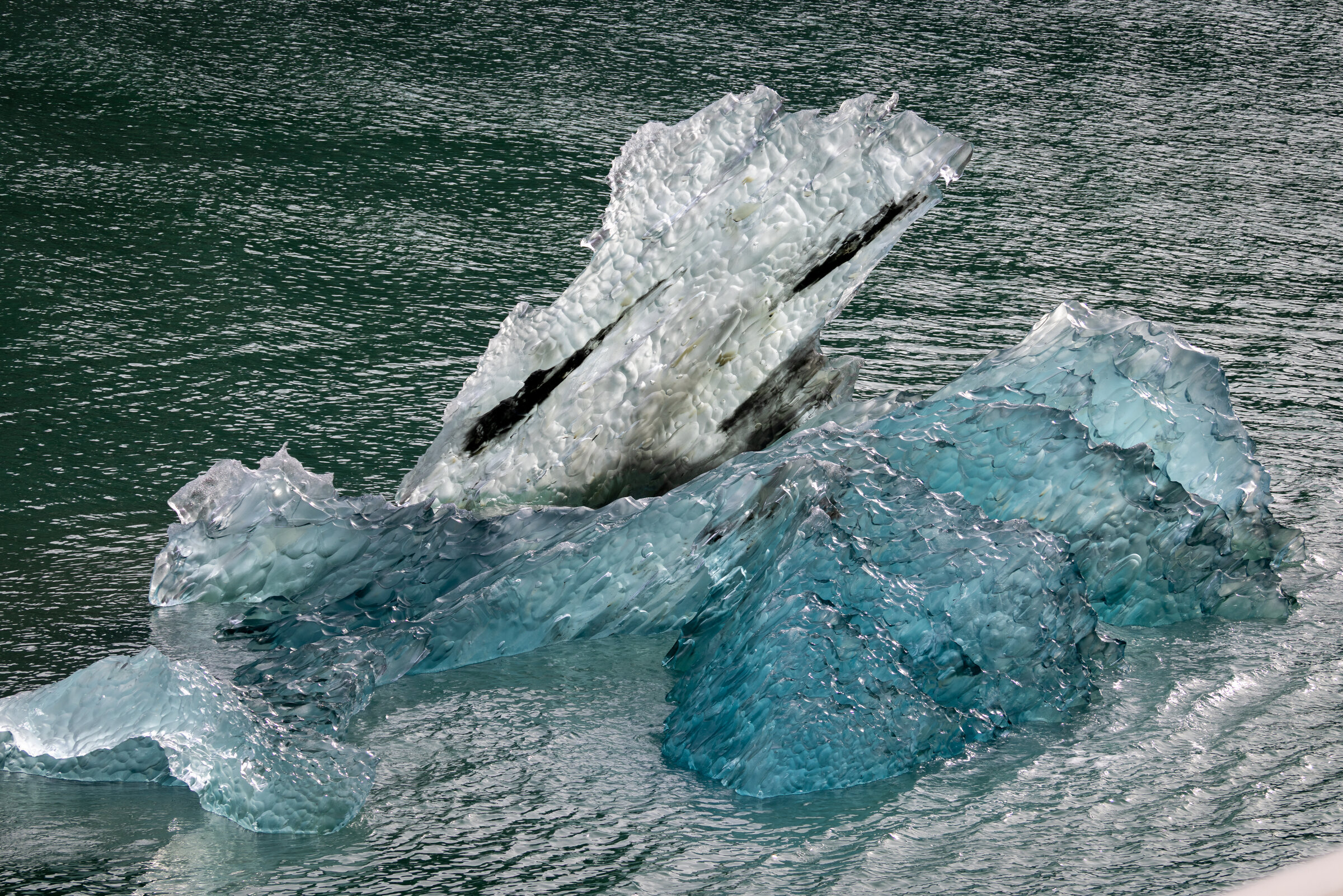
At 200mm, from thirty feet away, it looked like a small country.
The icebergs that calve from Dawes Glacier travel the length of the fjord before reaching open water. By the time you meet them they’ve already been tumbling for miles, rounded and translucent, the trapped air giving the ice a blue-green tint.
This one was turning slowly in the current. Up close, the scale becomes genuinely disorienting.
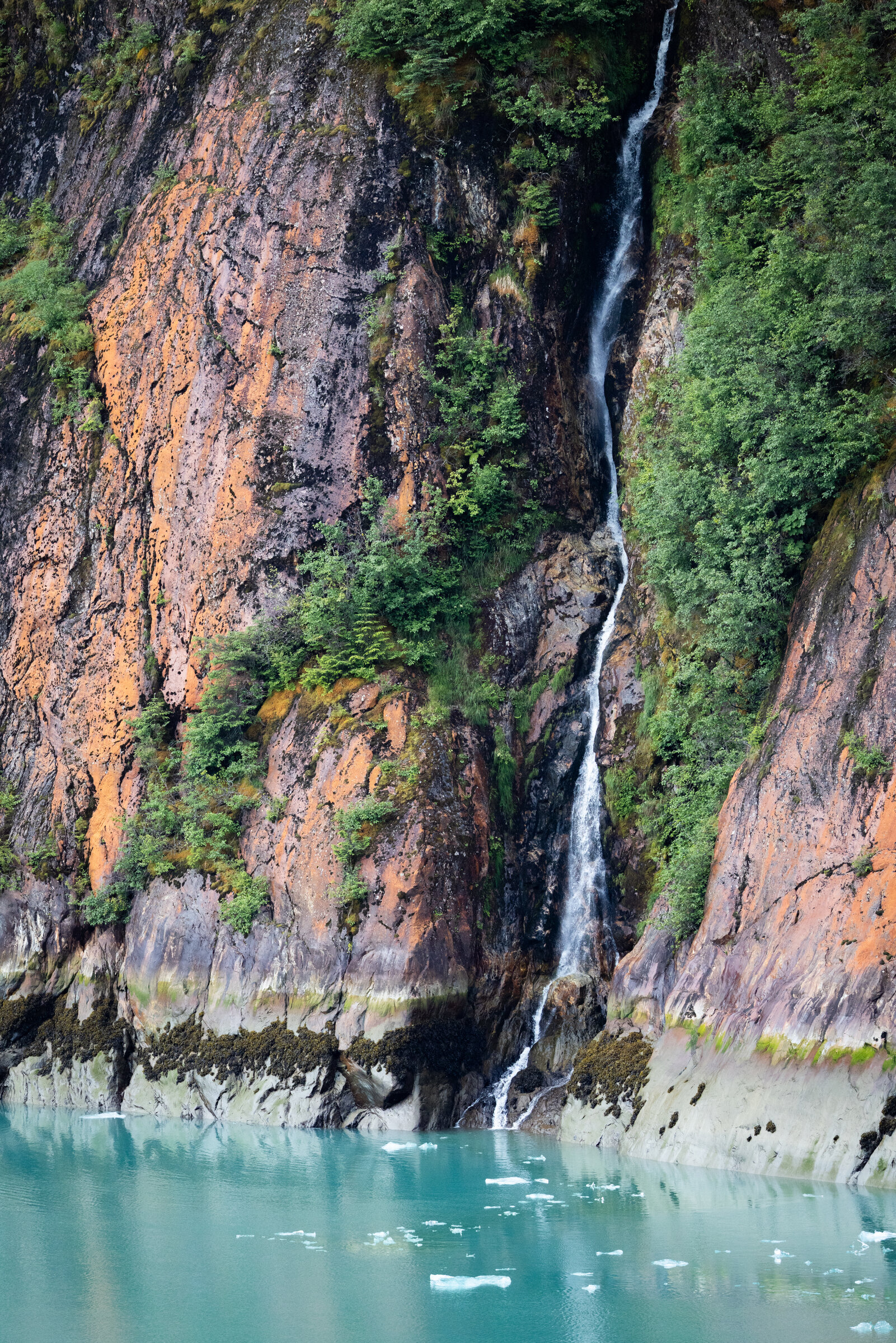
The orange rock runs right down to the waterline.
The cliff walls in Tracy Arm are stained iron-red from minerals in the rock, and a waterfall cuts a white line straight down through the color. The whole wall looks almost like a painting: the contrast between the rust, the white water, and the green treeline above.
The narrow fjord funnels you close enough that you can hear the waterfall even over the boat engines.
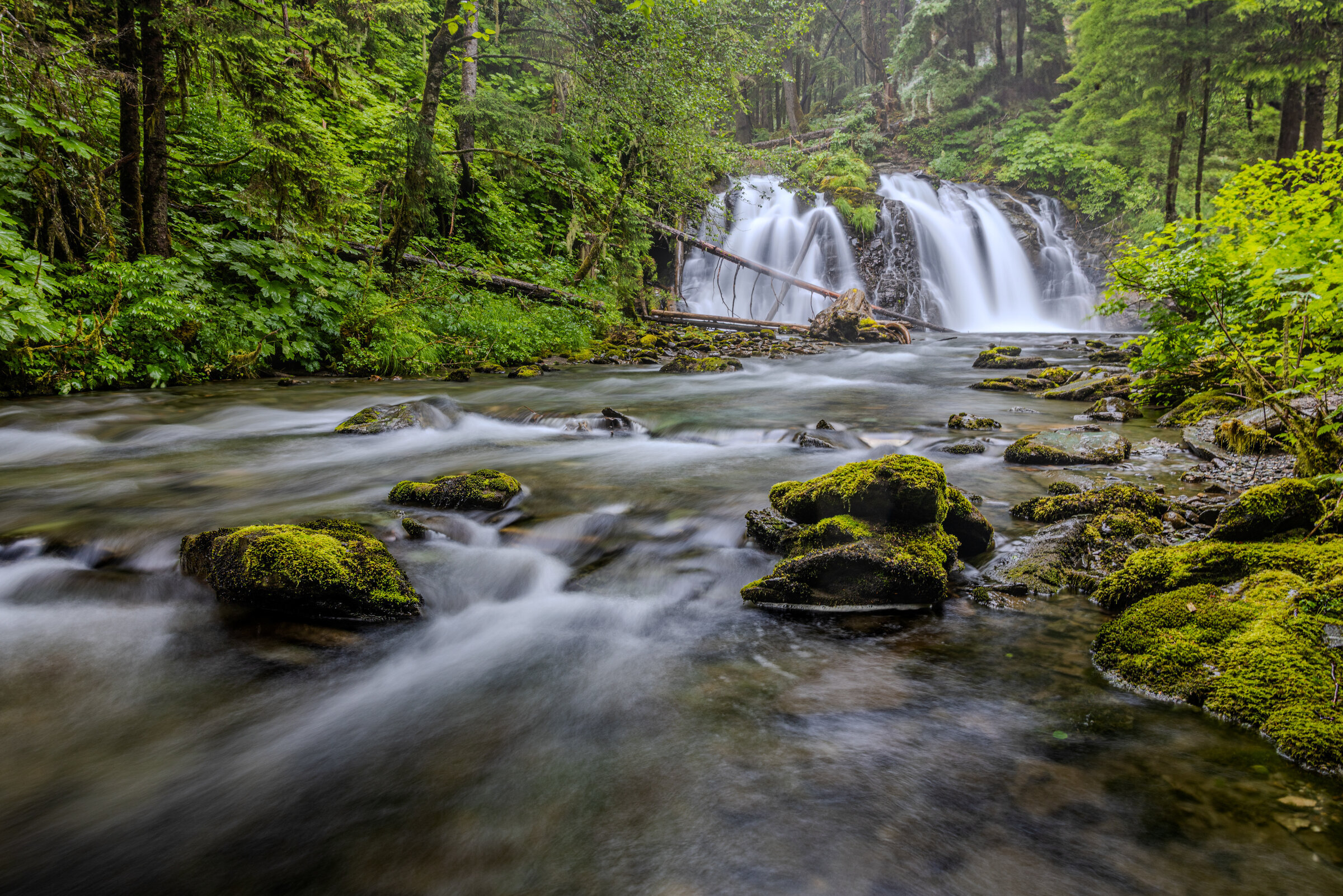
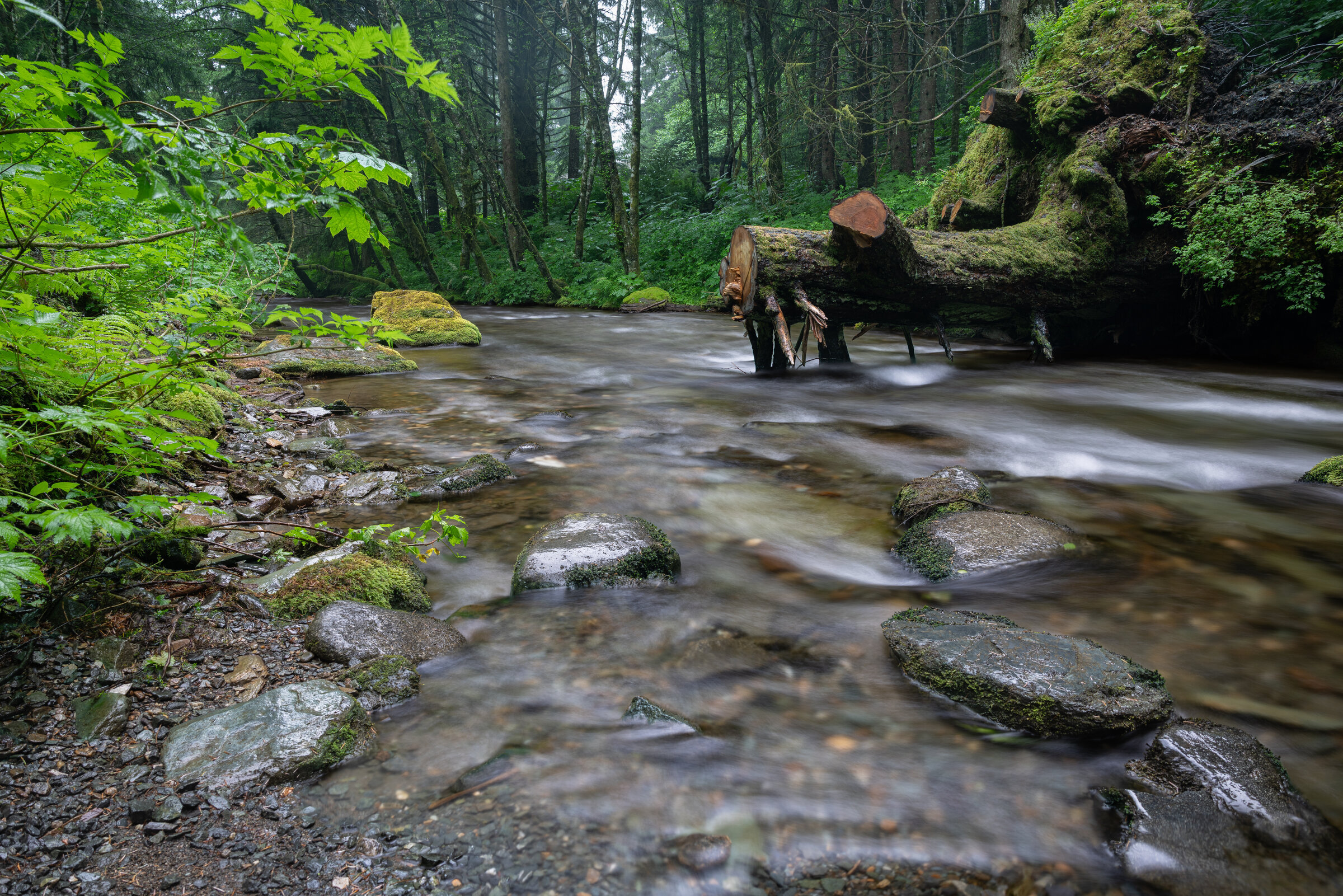
The log fell at an angle that made it part of the frame.
The rainforest in Southeast Alaska is the same temperate ecosystem as the Pacific Northwest coast: Sitka spruce, hemlock, ferns, and permanent damp. The fallen log had been sitting in this stream long enough that moss had started growing on the upstream face.
Southeast Alaska gets well over 100 inches of rain a year in some places. You can see it in everything.
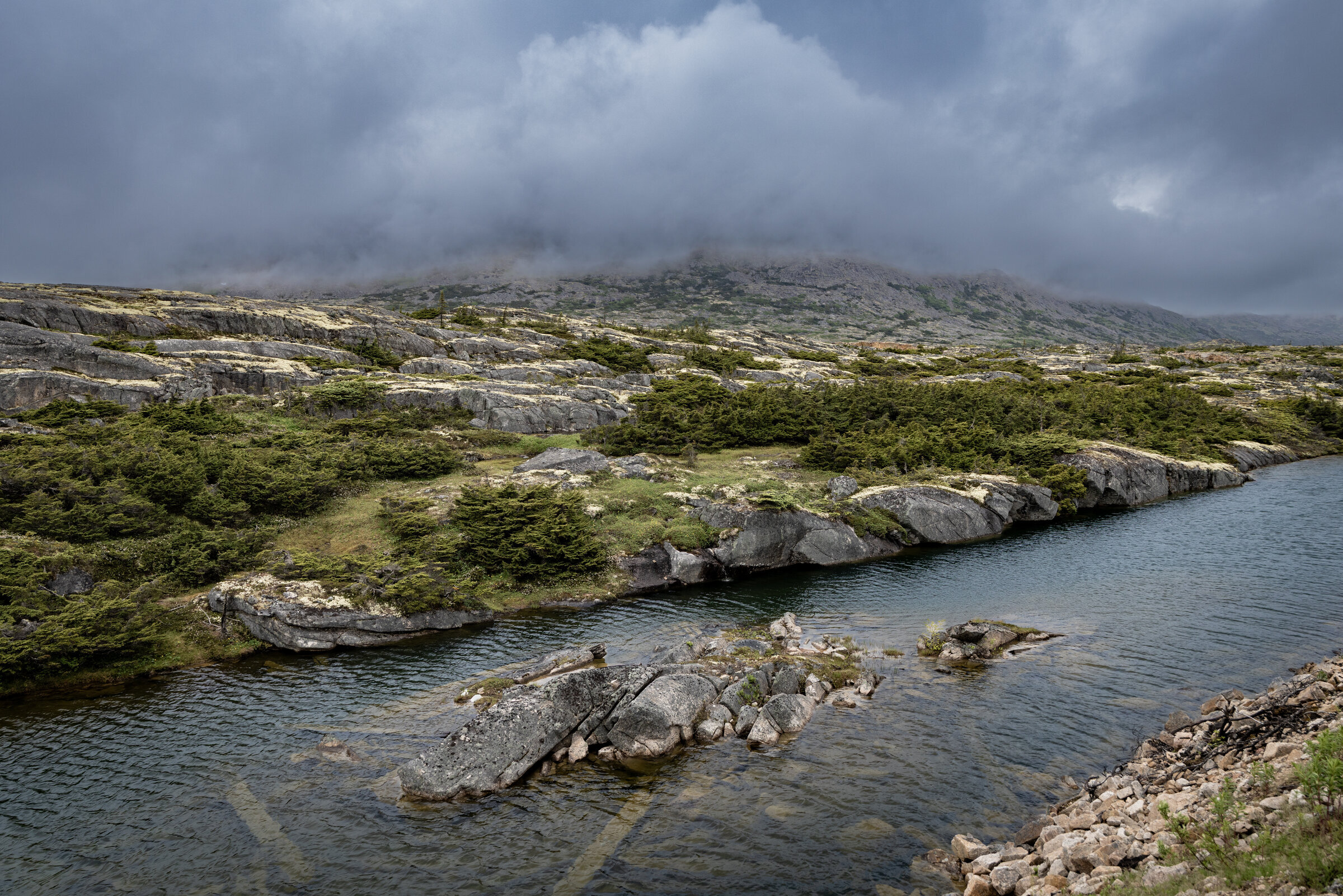
The tundra above the treeline doesn’t feel like Alaska. It feels like somewhere further north.
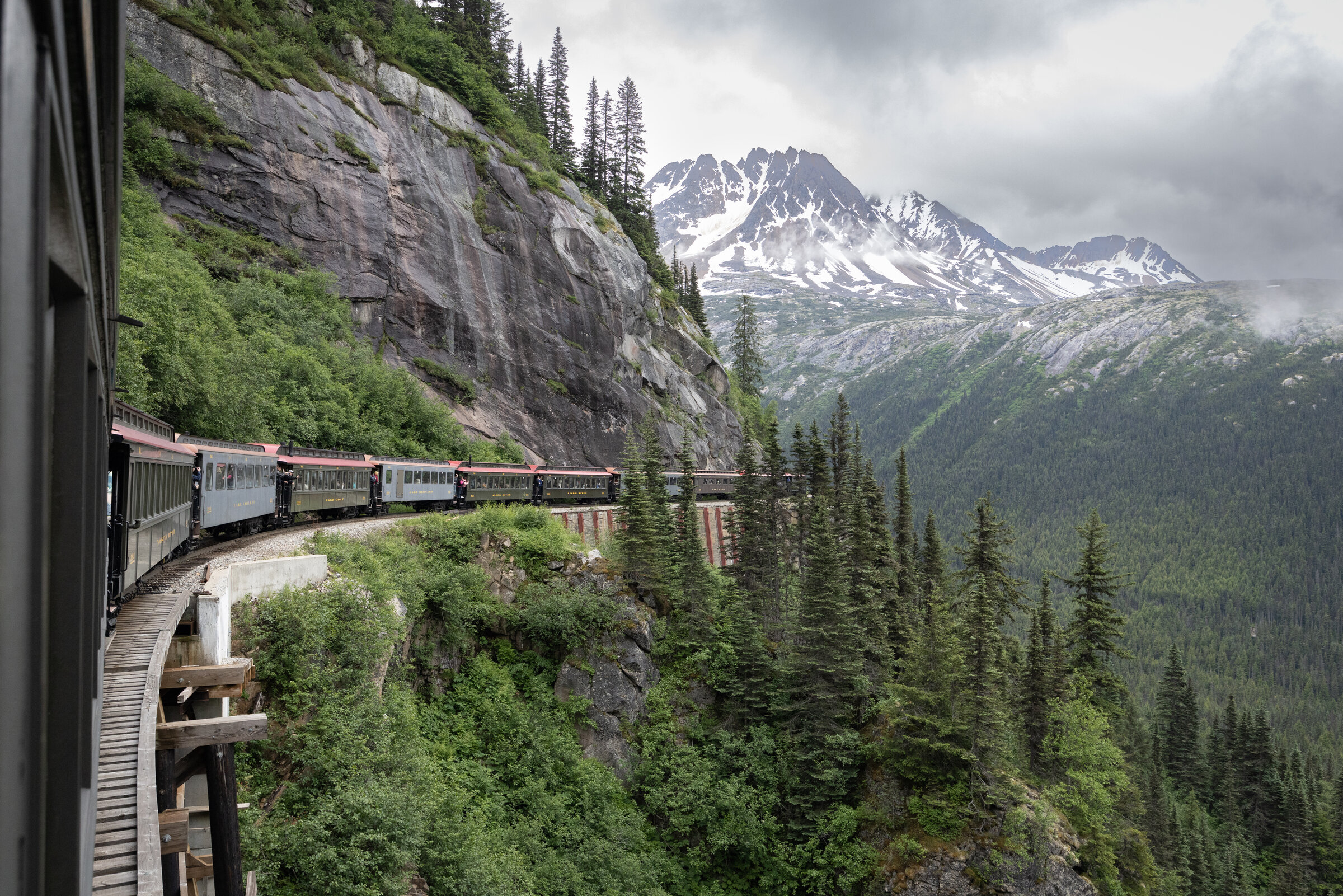
The White Pass trail climbs fast. Within an hour you’re above the treeline and into this: exposed rock, a string of alpine lakes, clouds sitting just above the ridge. The storm was building behind us the whole time.
The light was flat the whole morning. The landscape is open enough that it didn't matter.
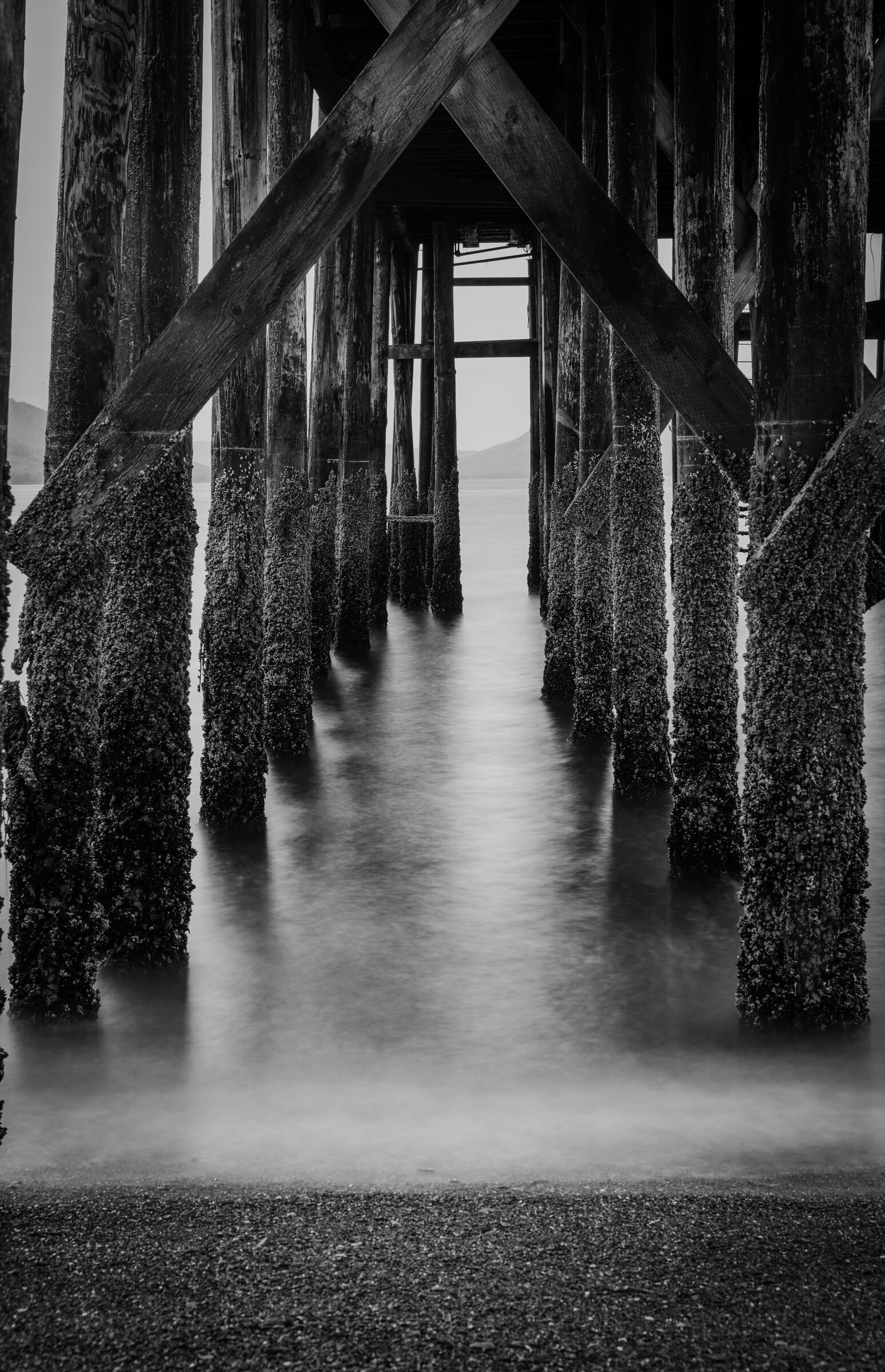
Twenty-five seconds looking up at the underside of something built to last.
The old pier at Skagway extends over the Lynn Canal on a forest of barnacle-covered pilings. I got under the deck and waited for the water to settle. The long exposure turned it into a soft plane of gray, and the wooden structure above went perfectly still.
The symmetry was already there. I just had to get low enough to find it.
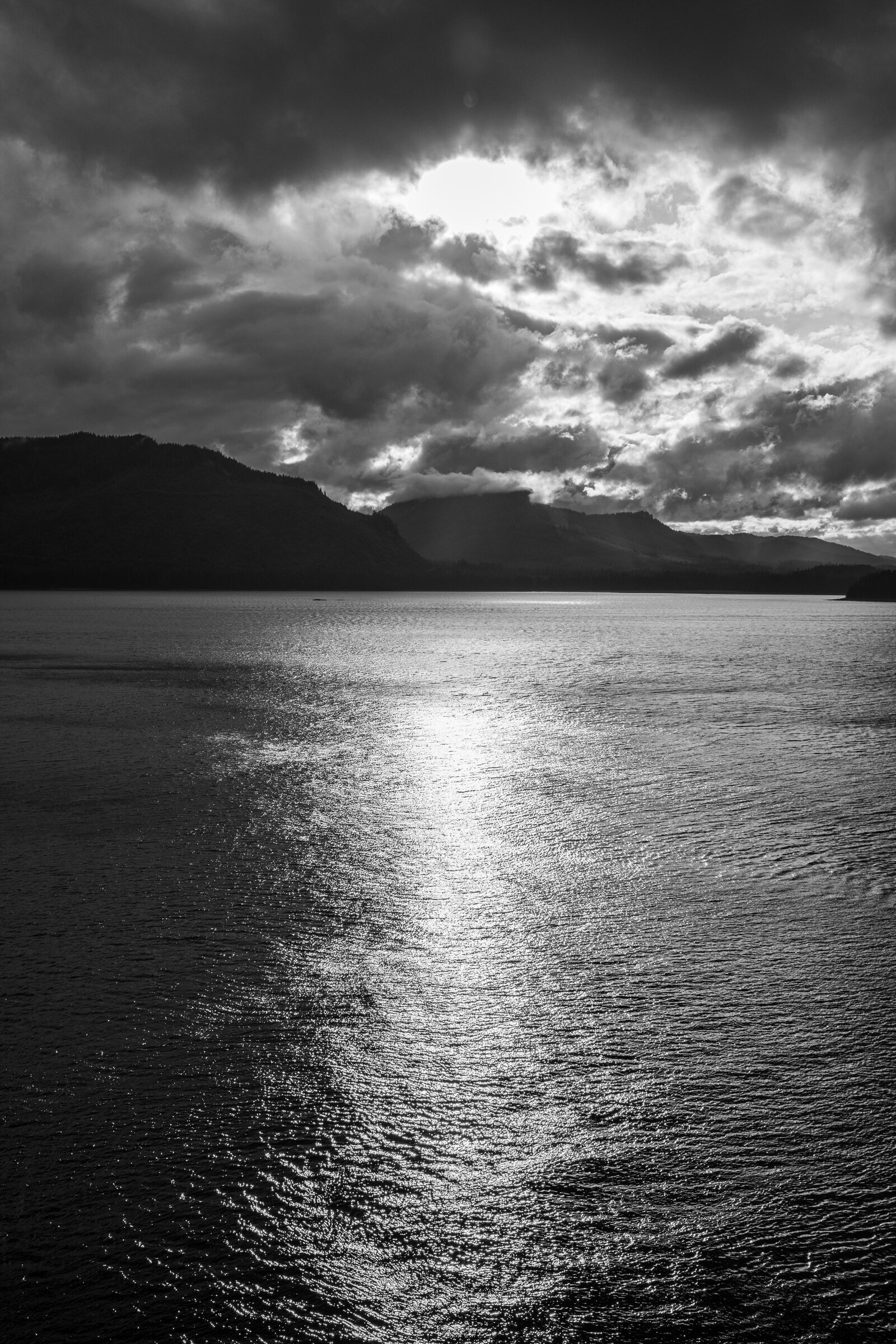
The sun punched through the clouds for about ninety seconds.
We were still in Skagway harbor when the light broke. I had my camera out and got two frames before the gap closed again and the clouds reformed over the mountains.
The monochrome conversion came later, but the scene was already reading in black and white when I shot it, all silver water and dark ridgeline.
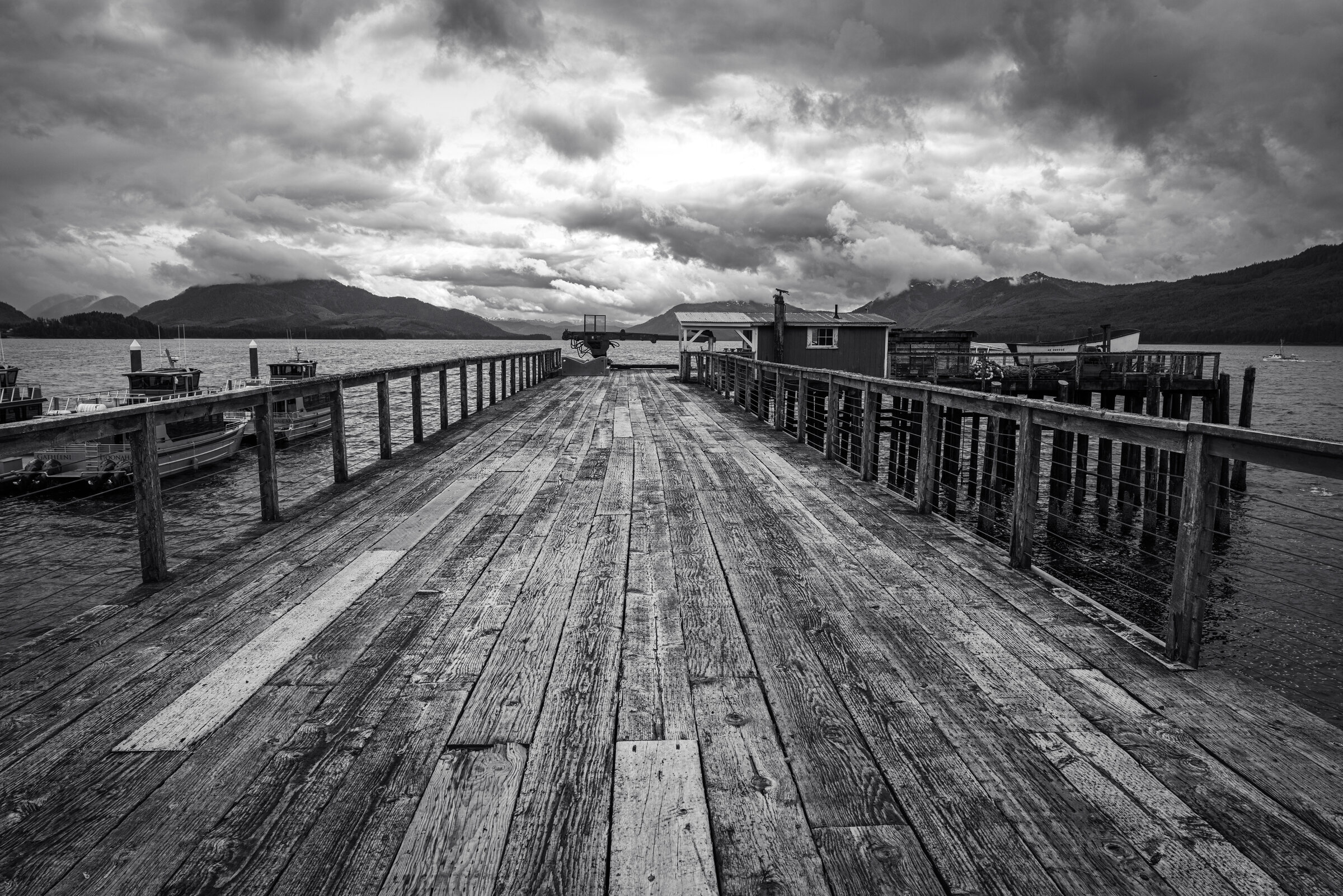
The dock has been waiting in the rain for a hundred years.
Icy Strait Point is a former cannery village that now operates as a port of call. The dock is original: weathered planking that flexes underfoot, wooden railings worn smooth. The overcast sky kept the light even, which is the only kind of light that does justice to a subject like this.
I shot straight down the dock toward the mountains. The symmetry arrived without any help.
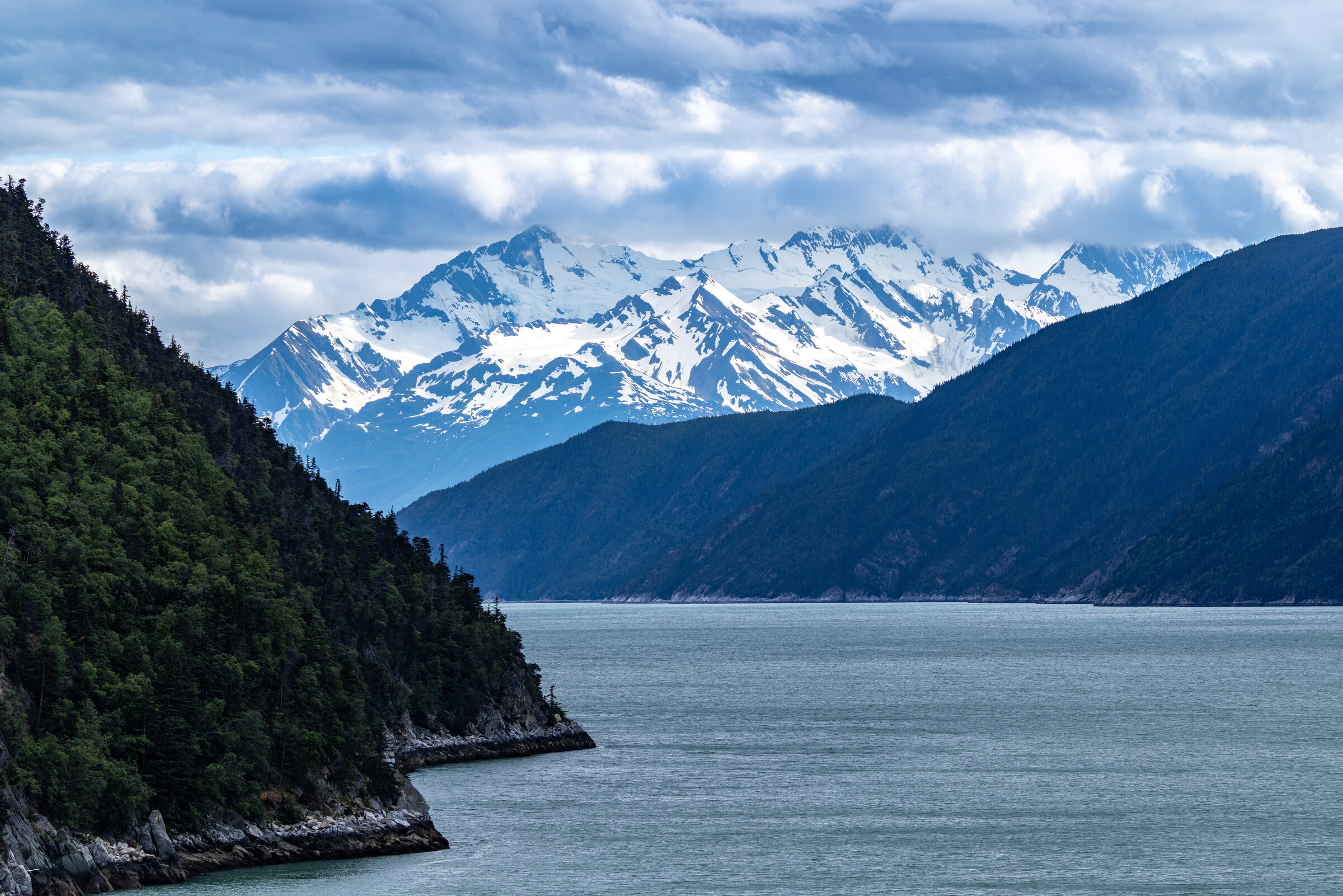
The telephoto makes the peaks feel closer and simultaneously less attainable.
The St. Elias Range is visible from Icy Strait on clear days, snow-capped summits sitting above the forested ridgeline across the channel.
The layers compress through the telephoto: dark slope in the foreground, the water, and the mountains stacked behind in diminishing saturation. The range keeps its distance.
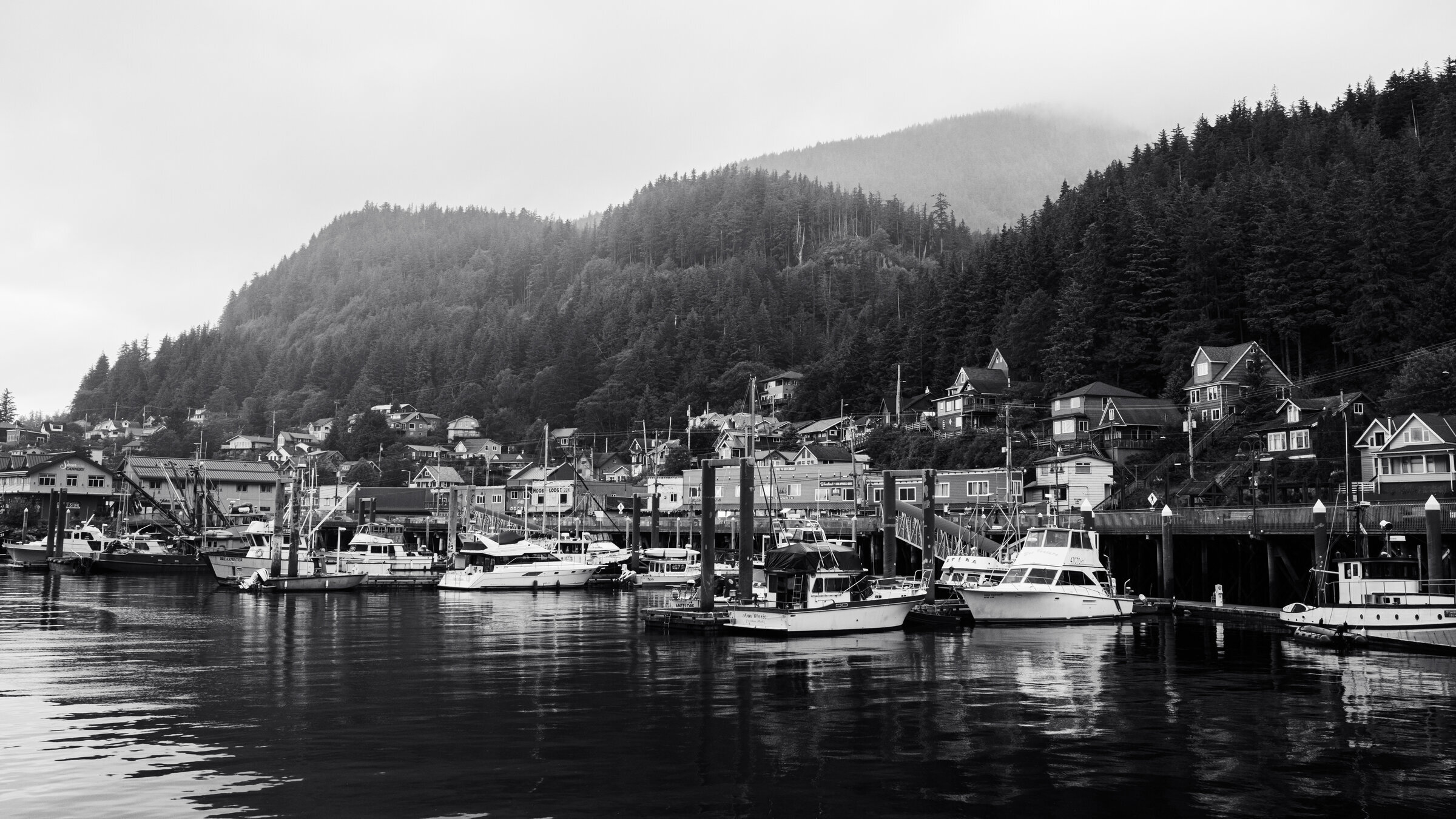
A fishing town that grew its buildings up the hillside because the hillside was all there was.
Ketchikan sits on a narrow strip of flat land between the water and the mountain. The houses climb the slope on stilts and stairs, the fishing fleet crowds the harbor, and the whole scene is permanently overcast. The city averages over 150 inches of rain a year.
Monochrome felt like the honest choice. Everything was already gray and silver and dark: the boats, the water, the spruce. Color would have been an argument the scene didn’t want to have.
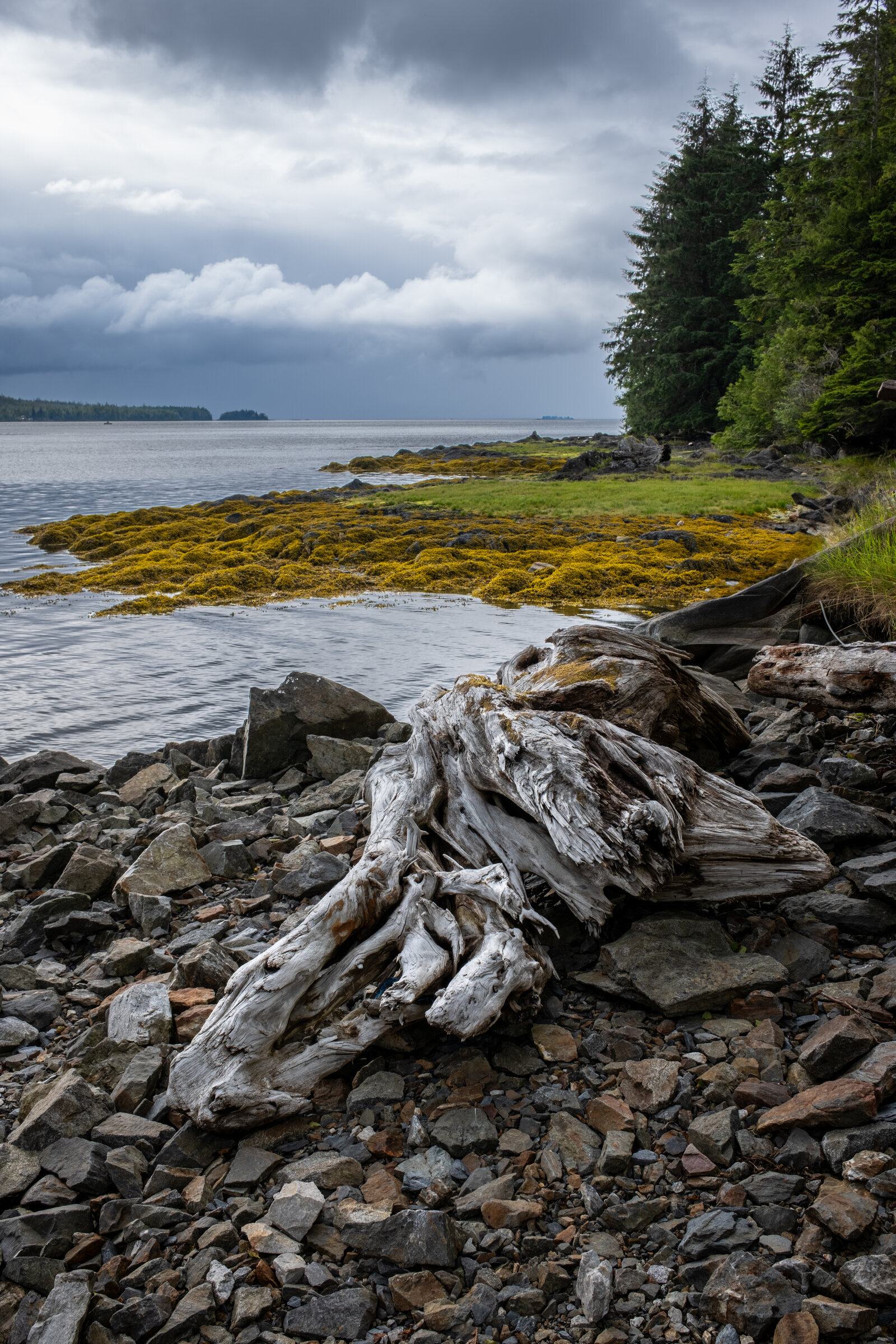
The driftwood here is older than anything built nearby.
The shoreline around the Totem Heritage Center is covered in driftwood that takes decades to reach this state, bleached, split, and architectural. Storm clouds were building offshore the whole time I was shooting.
I got low and shot into the frame with the clouds filling the space above the tree line.